Reading a helpful tweet from Metrorail about how they can be of service and, bearing in mind that it is Global Accessibility Awareness Day, made me think of the recent rail excursion involving the Western Cape Disability Network, which included this writer.
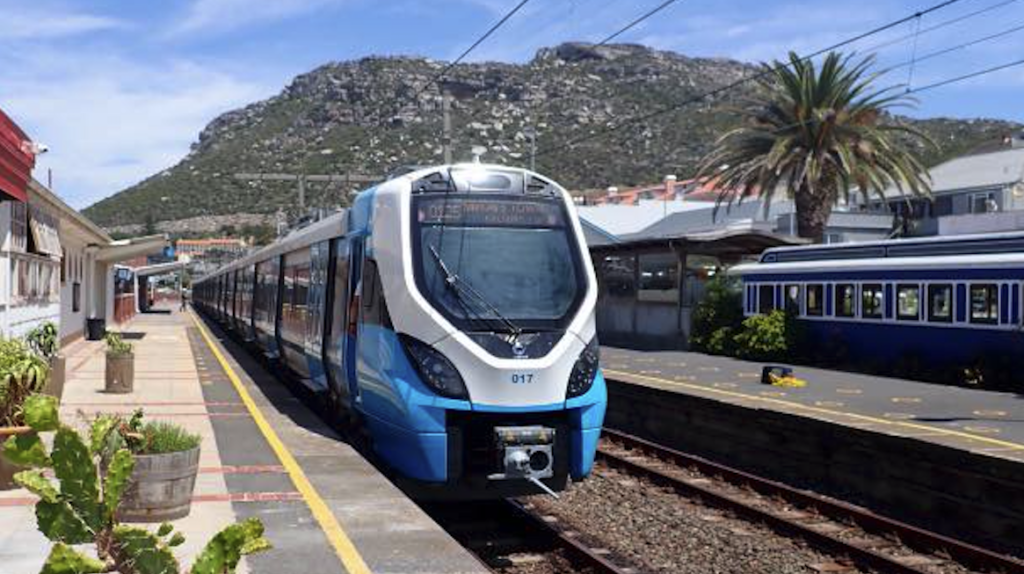
At the time, several people with visual and physical disabilities, caught the new “People’s Train” or “Blue Train”, which had long been vaunted by Metrorail as being accessible.
The point of the exercise was to highlight the challenges facing people with disabilities, particularly physical disabilities, and wheelchair users especially, when they wish to catch a train in Cape Town.
And so, with no small effort from wheelchair-users, who had to bring their own, portable ramps to Cape Town station in order to get on the train, we all set off.
But what did we prove?
Certainly, from a blind person’s perspective, I was impressed at the automatic doors and the station announcements, which were brilliant, and the fact that deaf users could also see the progress of the journey on a screen. But what about wheelchair users, particularly?
It was telling that we rode the train for nine or so stations from Cape Town to Retreat, and back, without getting off the train for whatever reason.
As an experienced disability inclusion consultant, I am not convinced that we brought the point home sufficiently to Metrorail, and interested parties, that the problem was not that private ramps had to be used to get on and off the train at Cape Town. It was that there was absolutely no possibility of any of those wheelchair users being able to access 99% of the stations we passed by! Even if the same ramps had to be used to get on to those platforms, almost all of those stations are inaccessible in their own right.
A train is to a station what a saucepan is to a stove. It does not matter how pretty and expensive your saucepan is, it is useless without a source of heat like a stove to fulfil its purpose.
Similarly, stations that cannot be accessed by passengers either from the train or the street are no good to those passengers.
It is not the train alone that makes a service accessible. It is the network, including trains, stations, staff and other facilities.
If any of these are out of step and inaccessible it has to fail the access test.
Frankly, Metrorail and PRASA would have done better over the last 30 years by paying attention to making the stations and infrastructure more accessible, as we have been asking them to do, than buying expensive, pretty trains. Had infrastructure been more accessible, countless more people, with particularly physical disabilities, would have benefitted and been able to access education, work and recreation opportunities.
After more than 45 years of using trains … No! The new Blue, People’s Train cannot, under any circumstances, be called accessible.