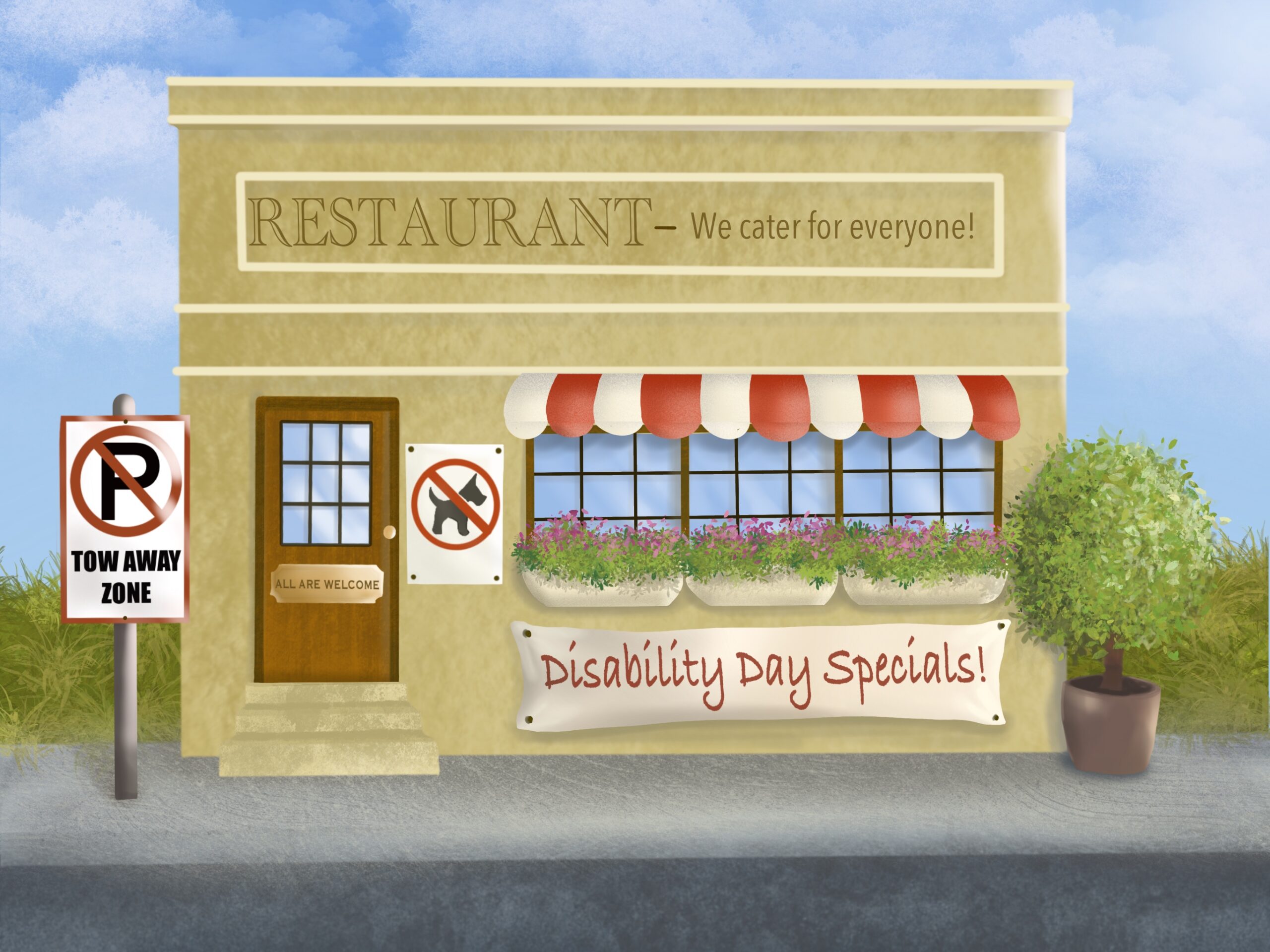
At lunch recently with a bunch of people I didn’t know, I was reminded again how separated we, as People with Disabilities are.
I was once again fascinated by the level of basic ignorance, displayed by normal average folks, about the basic capabilities of blind people, and the various bits of kit available to them, talking watches, Voice-over on the iPhone, (and you should have seen their faces when I told them that the phone was connected to my hearing aids), screen-reader on the laptop, etc, etc. I didn’t have the heart to tell them about my talking tape measure. I think the one lady would have had a coronary.
“Bravo! amazing!” they cry. “Fascinating!” “Isn’t it wonderful what they can do these days with technology?”
What on earth!?
I mean, from our point of view as blind people, that is like saying when Amelia Earhart flew across the Atlantic in 1932: “Isn’t it amazing? I didn’t even realise that there were flying machines called aeroplanes these days.”
I used that analogy deliberately because we have had talking software on conventional PCs for more than 30 years.
We scratch our head when this sort of thing happens, which is frequently, and wonder how it could be possible that so few people know about this sort of stuff?
Of course, we don’t roll our eyes and deride their ignorance, but just smile and nod and agree that this kind of tech is indeed amazing.
Which neatly leads me to the hottest game in town lately, Diversity, or as it is more commonly known DEI (Diversity, Equity and Inclusion) and how disability equity really fits in with society and the world of work.
Just a cursory reading of some DEI articles recently confirmed to me that, indeed, Disability was in fact mentioned, most of the time.
But having said that, most of the time it was literally just a mention throwing it in amongst race and gender, LGBT, etc, like toys in a toybox.
Read a little deeper and you will quickly notice that there is rarely any detail or deep analysis in terms of how exactly Disability fits into this narrative, let alone how it fits in with the ultimate outcome of a more diverse society.
On the other hand, race, gender and the other elements of DEI dominate unequivocally.
We need to beware of expecting too much from DEI if we intend including Disability Equity in any meaningful way. As it stands, I am not convinced that anything close to sufficient Disability awareness can be expected from conventional DEI initiatives alone.
If I were to be asked as a visually impaired and blind man after nearly 60 years on this earth and more than 20 years specialising in Disability Equity and Inclusion, what was the most significant element of DEI, I would have to say inclusion, or the lack of it being the greatest reason why we struggle so to embrace this forgotten child of Diversity.
Just adding Disability into the diversity lexicon and the narrative, won’t fix the problem.